

How Agentic AI automates your business with n8n
In short: Agentic AI will be the defining trend in process automation by 2026 – AI agents plan and complete tasks autonomously, instead of just following rigid rules. n8n is one of the tools to make precisely this leap from simple automation to true AI employees: It combines classic workflow logic with AI agents that make independent decisions, use tools, and remember context. For German SMEs, this means: automated quote generation, independent preliminary accounting checks, or AI-driven initial customer service contact are no longer a distant dream, but achievable today.
Why Agentic AI is a major game-changer right now
Recent surveys paint a clear picture: Approximately 60% of companies are already productively using generative AI in at least one business function, and Agentic AI already accounts for about 30% of the AI budget in leading companies – with a clear focus on multi-stage workflows. The shift is also noticeable among German SMEs: AI agents that autonomously plan and execute tasks, without manual guidance at every step, are currently considered the most important automation trend.
The difference from classic automation is crucial, as it changes what you can automate:
- Logic: Classic automation (RPA/rules) follows fixed if-then rules – Agentic AI makes independent decisions.
- Input data: Classically, only structured data – Agentic AI also processes unstructured data like text, speech, or PDFs.
- Flexibility: Classically, it breaks down with deviations – Agentic AI adapts to new situations.
- Typical use case: Classically, repetitive individual tasks – Agentic AI, multi-stage, complex processes.
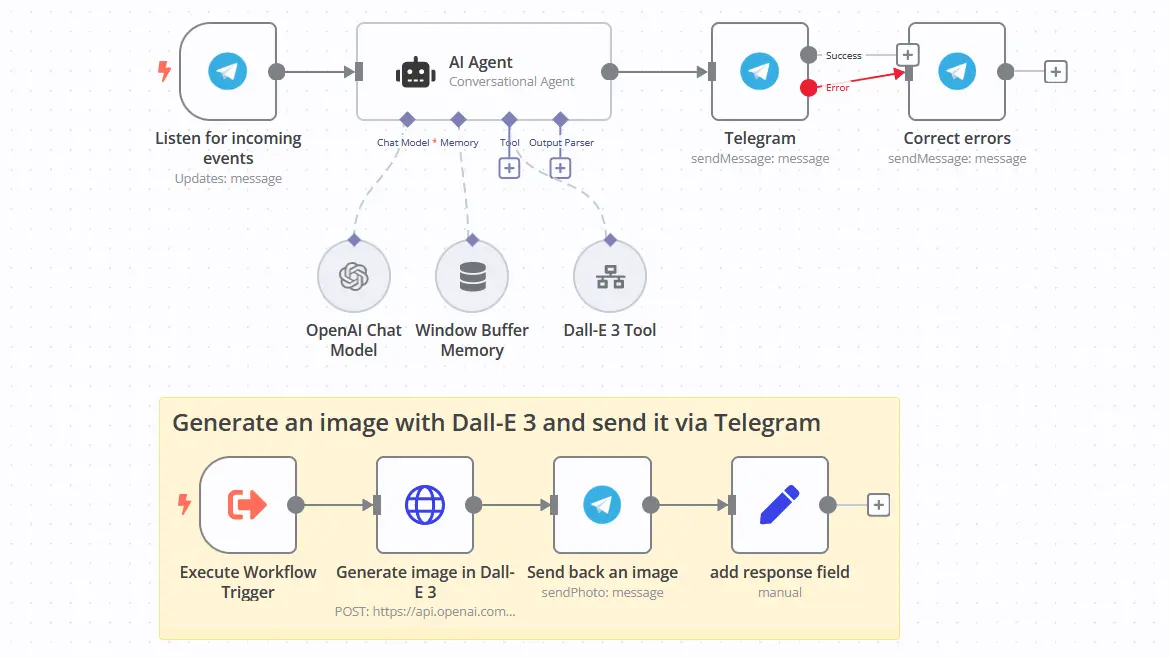
This is precisely where n8n comes in: It brings both worlds together. You can continue to build reliable, rule-based workflows – and precisely where it makes sense, deploy a true AI agent that autonomously reasons, calls tools, and remembers previous interactions.
Three specific Agentic AI use cases for SMEs
1. Automated Quote Generation
A customer inquiry arrives via email. An n8n agent extracts the requirements, compares them with your price list and previous offers, creates an initial draft proposal, and submits it for approval, preventing a sales team member from starting from scratch. This saves an enormous amount of time, especially for recurring standard inquiries.
2. AI-Powered Pre-Screening in Accounting
Incoming invoices are automatically recorded, matched against orders and delivery notes, and flagged for discrepancies (amount deviation, duplicate invoice, missing order reference). Only cases truly requiring clarification land on your team's desk – the rest pass through automatically.
3. AI-Driven Initial Contact in Customer Service
Instead of a rigid chatbot decision tree, an AI agent handles the initial contact, understands the actual request even with unclear phrasing, retrieves information from your CRM or knowledge base if needed, and escalates more complex cases specifically to the right person on the team – with full context instead of an empty handover.
In all three examples: The AI handles the preliminary work, while your team retains control over critical decisions.
Why n8n is the right tool for this step
- Combination of No-Code Speed and True Programmability: You build standard processes via drag-and-drop, and for special cases, you add your own code – without switching tools.
- AI Agents with Real Memory: Via memory options like Redis or Postgres, an agent remembers context across multiple interactions, instead of starting from scratch with each request.
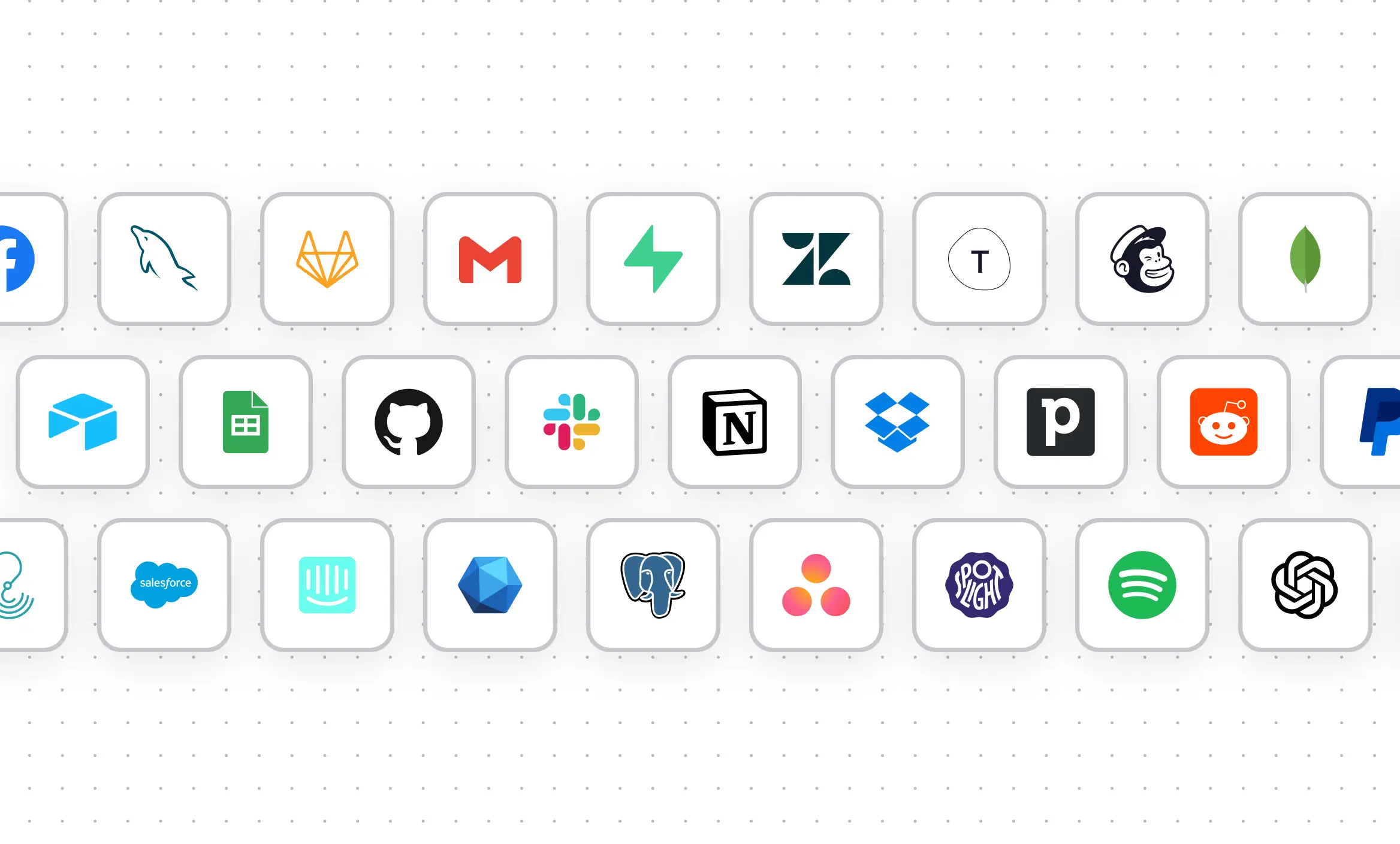
- Integration with Your Existing Systems: Over 500 native integrations plus MCP connectivity mean that an agent can work directly with your CRM, Slack, your accounting software, or project management tool.
- Controllable Autonomy: Through gated tools and approval steps, you determine where the agent can act autonomously and where a person makes the final decision.
What to Consider During Implementation
Studies consistently warn: Without a well-thought-out governance and roll-out plan, even well-built agents fail – the failure rate for unstructured Agentic AI project implementations is over 40%. The proven approach for getting started:
- Start small: A clearly defined process with high automation potential, no company-wide "big bang" implementation.
- Ensure data quality: An AI agent is only as good as the data it works with.
- Define clear roles: Who is authorized to create, approve, and modify automations?
- Measure, don't hope: Establish clear KPIs upfront to demonstrate the actual impact.
- Scale gradually: What works in the pilot project gets rolled out – not the other way around.
This structured approach is precisely where experienced guidance provides value: Instead of experimenting for months on your own, you'll identify the process with the greatest leverage together with us, build a clean pilot in n8n, and only scale once the benefit is clearly proven.
.png)
.svg)